The Forgotten Winter Dream: The Ski World Cup Race at Teufelsberg

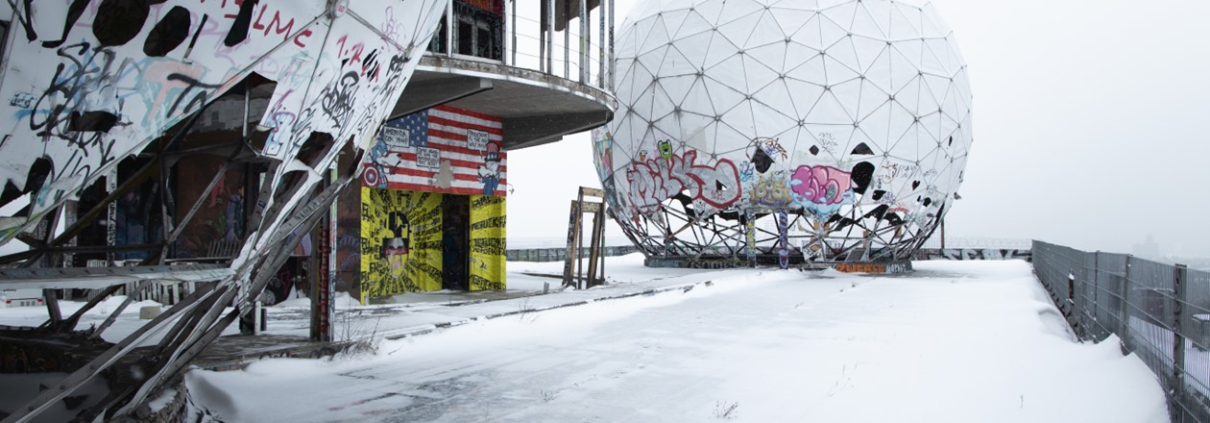
When people think of Teufelsberg today, art, history, and nature are usually what come to mind. But few know that this iconic Berlin landmark was once the site of a spectacular skiing event. On December 28, 1986, Teufelsberg hosted a Ski World Cup race – right in the middle of a divided city. A true winter fairy tale, filled with improvisation, mishaps, and a touch of Berlin’s unique ingenuity.

Ski Fever in Berlin

Back in the 1960s, Teufelsberg, standing at 120.1 meters and long celebrated as Berlin’s highest point, became a winter sports hotspot. With floodlights, snow cannons, and even a ski lift, it drew skiers from all over the city. Ski lessons were offered for beginners, and Berliners flocked to the slopes to enjoy a taste of the Alps right in their backyard.

The pinnacle of Teufelsberg’s skiing era came in 1986 with Berlin’s first and only Ski World Cup race. The course was 400 meters long with a vertical drop of 82 meters – not much by Alpine standards, but an impressive feat for Berlin. International ski stars like Markus Wasmeier, Ingemar Stenmark, and Bojan Krizaj competed head-to-head in a parallel slalom event, making it an unforgettable day for the city.

Rain, Salt, and Slushy Snow

Preparing the course was a monumental effort. Two snow cannons laid down 20 centimeters of artificial snow under the guidance of an Austrian expert. But race day brought unexpected challenges. With temperatures at 4°C and steady rain, the snow started to melt, threatening to turn the event into a muddy disaster. The organizers saved the day with an unlikely hero: pretzel salt, which stabilized the snow enough to keep the race going – a perfect example of Berlin’s creative problem-solving.

Despite the weather, up to 14,800 fans turned out to cheer on the athletes. However, the turnout fell short of expectations, as organizers had hoped for twice that number. Financially, the event didn’t live up to its ambitions, but it left a lasting impression, nonetheless.

Friction with the Americans

The event’s proximity to the U.S. listening station on Teufelsberg caused some diplomatic tension. Allegedly, a U.S. officer demanded that television cameras avoid showing the station’s buildings during the broadcast, threatening to cut the signal if they did not comply. The dispute did not escalate further, and viewers across Germany watched comfortably from home as Austria’s Olympic champion Leonhard Stock claimed victory. Interestingly, Stock never returned to Berlin after his triumph.

A Unique Chapter in Berlin’s History

The Ski World Cup race at Teufelsberg remains one of Berlin’s most curious and fascinating stories. It is a testament to the city’s creativity and its willingness to take risks, even when the odds seem stacked against it. This winter fairy tale proves that in Berlin, anything is possible – even skiing on a hill made of rubble. The only question that remains: why hasn’t Berlin tried something like this again?

Wishing you a merry Christmas and happy discoveries of Teufelsberg’s unique history!


Source: Behnisch I. (2023). Als die Ski-Weltelite auf den Teufelsberg kam. rbb24. Retrieved from https://www.rbb24.de
Berlin’s Highest Winter Market: A Magical Experience on Teufelsberg

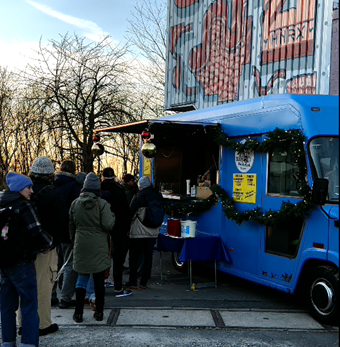
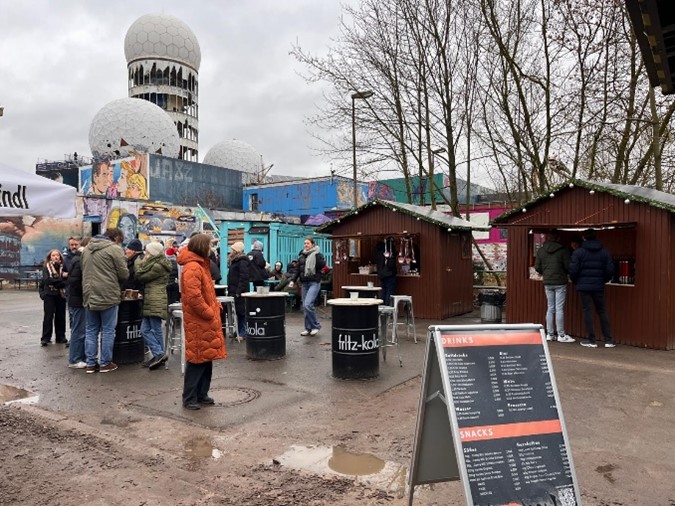
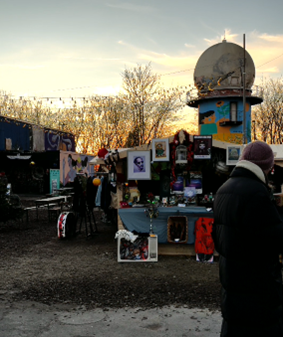
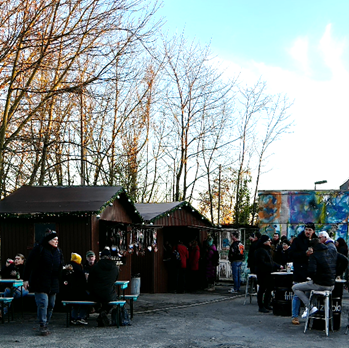
The winter market on Teufelsberg is no ordinary Christmas market – it is set at one of the most fascinating and elevated spots in Berlin. Here, the magic of the holiday season blends seamlessly with a unique urban flair, featuring impressive street art, a rich history, and breathtaking views over the city. Visitors can look forward not just to a classic Christmas market experience but to a variety of unique offerings that make this market a true hidden gem.

Nestled in this extraordinary setting, the market features a colourful array of stalls offering lovingly handcrafted and one-of-a-kind products. From beautifully designed jewellery to individual decorations and creative gift ideas – there is something for everyone to discover and enjoy.

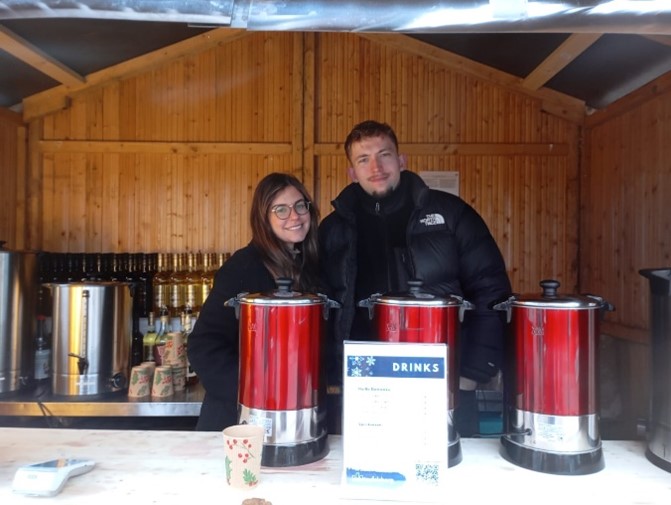
Of course, all the traditional winter market delights are on hand, too. Warming mulled wine, fruity punch, and a selection of hot drinks provide comfort on cold days, while festive treats like gingerbread and savoury snacks invite you to indulge. The scent of cinnamon and sugar fills the air, creating a cozy atmosphere that will light up the faces of visitors young and old.

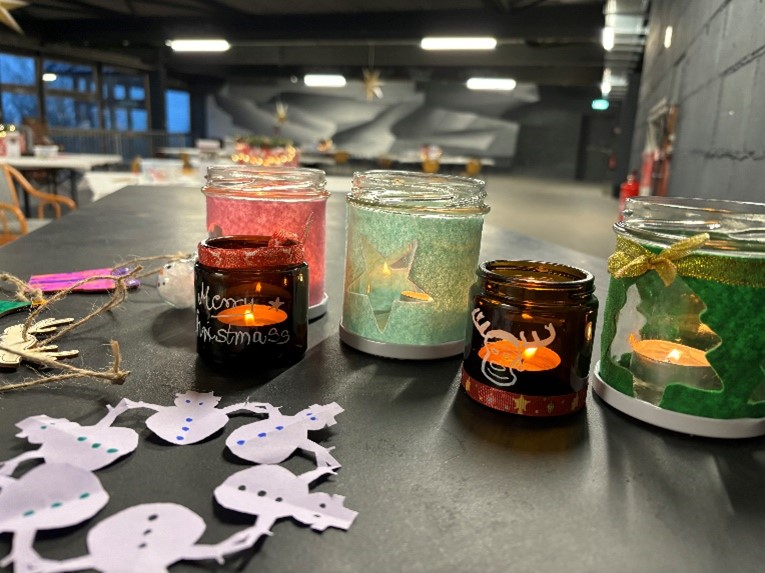
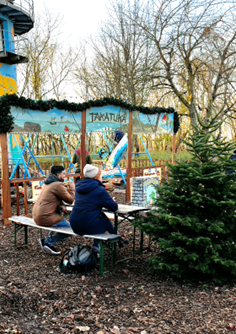
A particular highlight is the cozy Bastelstube (craft workshop), where children – and even adults – can get creative. Whether it is candle-making, creating tree ornaments, or designing unique Christmas gifts, there is something for every skill level. From beginners to seasoned crafters, everyone can join in the fun. Many adults have already rediscovered their inner artist here, leaving with glowing smiles and handmade treasures to remember their visit.

Adding to the charm, a historic swing carousel offers nostalgic moments for visitors of all ages. The gentle swaying and soft creaking of the wood evoke a sense of warmth and take you on a small journey back in time.

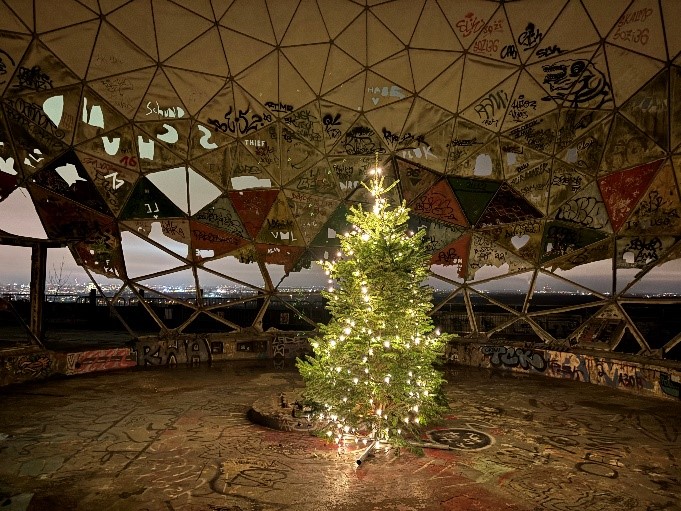
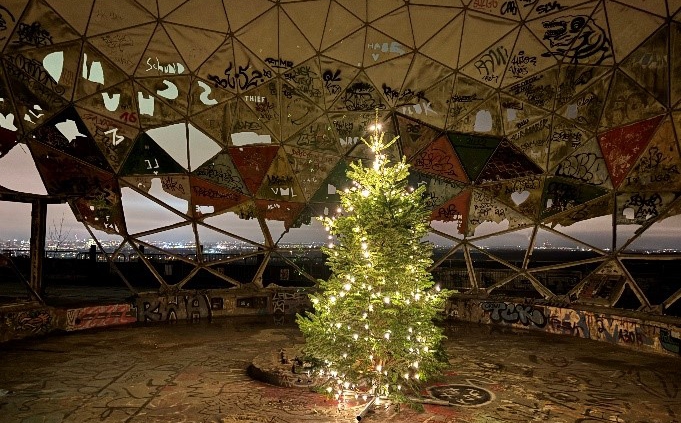
No winter market would be complete without a Christmas tree, and Teufelsberg is home to the tallest Christmas tree in Berlin. Perched on the rooftop terrace, the beautifully decorated tree is surrounded by twinkling lights, perfectly complementing the festive atmosphere. The panoramic view from here is unmatched – by day, the vastness of the city stretches out before you, and at dusk, Berlin transforms into a glittering sea of lights. This magical backdrop makes the highest point of the market a perfect spot for unforgettable photos.

The winter market is open until January 1st (please note: Teufelsberg will be closed on December 24th). Visitors can experience the festive atmosphere Thursday through Sunday, and from December 25th, the market will be open daily for its final week. If you have not had the chance to visit Berlin’s highest winter market yet, there is still time to discover this special blend of creative stalls, seasonal treats, and spectacular views – a truly unique winter experience.

Letter R – KOTTITAUBE – Pigeons as a Statement

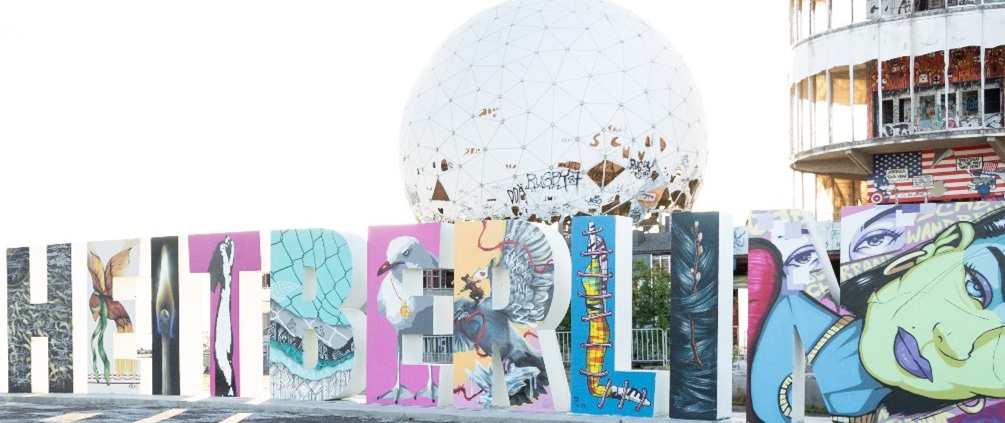
When you look at the #FreiheitBerlin artwork at Teufelsberg, the powerful ‘R’ immediately draws you in. This creation is the work of Till Jürgens, better known as KOTTITAUBE, a Berlin-based graffiti artist and communication designer. His name reflects his roots in Kottbusser Tor, Kreuzberg, where he grew up in the 1980s, deeply influenced by Berlin’s vibrant lifestyle and rebellious graffiti culture.

The Language of Pigeons

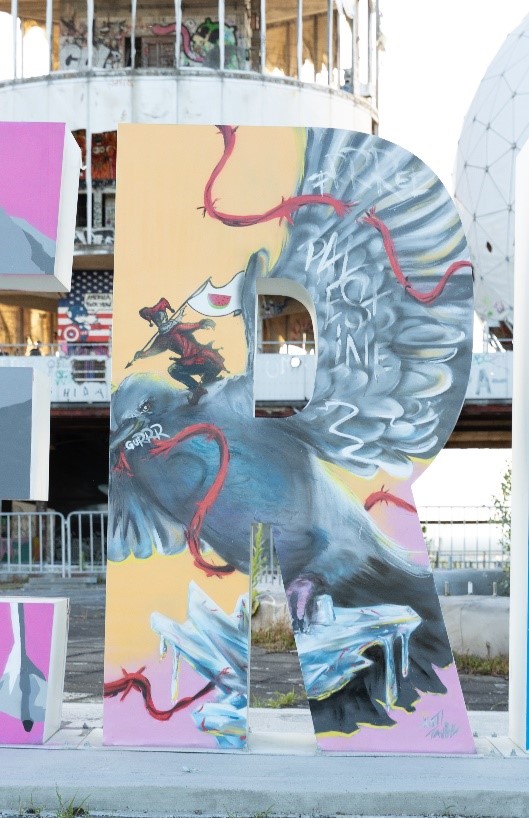
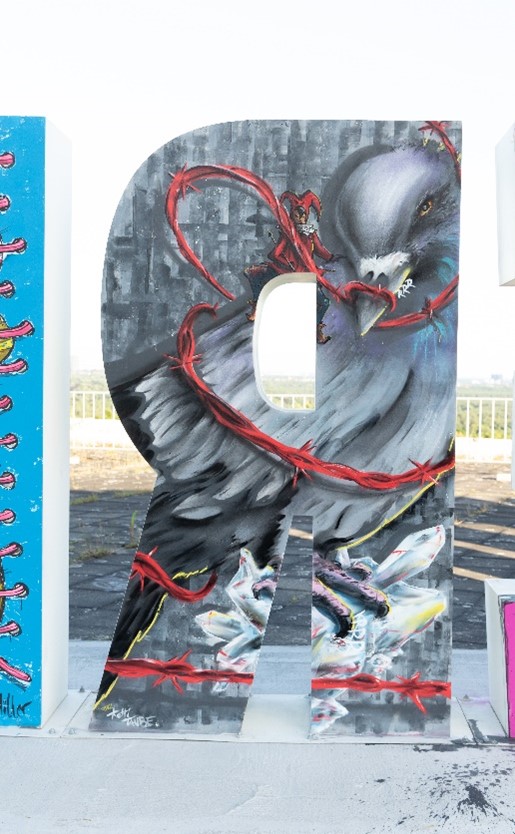
KOTTITAUBE uses the ‘R’ to tell a powerful and layered story. On one side, a pigeon is bound with red barbed wire—an evocative symbol of restriction and oppression. On the other, the barbed wire unravels, and the pigeon takes flight into freedom. This stark contrast captures the tension between control and liberation, a universal theme relevant in many global contexts.

The pigeon depicted is not the traditional white dove of peace but a gray urban pigeon—a deliberate symbol of city life. It represents adaptability and resilience, shaped by the harsh realities of urban environments like Berlin, where KOTTITAUBE himself grew up.

The ‘R’ features phrases such as “R as in fRRee Palestine! R as in Rafah! Don’t let them silence your beak!” These words highlight the Israeli-Palestinian conflict and the city of Rafah in the Gaza Strip, symbolizing blockades and military tensions. The red barbed wire reinforces these themes, representing both restrictions and the persistent yearning for freedom.

Another striking detail is the red figure riding the pigeon, carrying a white flag with a watermelon. The watermelon, with its colors—red, green, white, and black—mirroring the Palestinian flag, has become a symbol of resistance. It is often used as a subtle expression of cultural identity and solidarity in the face of restrictions.

The repeated emphasis on the letter ‘R’ is multi-faceted: “R as in fRRee Palestine!” and “R as in Rafah!” not only refer to the letter itself but also evoke the cooing of a pigeon—a rough “Grrr” that symbolizes persistence and resilience.

The artwork’s details are captivating: the pigeon’s determined gaze, the red barbed wire winding through the scene like a silent reminder, and the surreal crystalline forms at the bottom of the letter. Each element highlights the obstacles that must be overcome to achieve freedom and peace.

KOTTITAUBE’s Roots

KOTTITAUBE describes himself as an artist whose life has been shaped by letters. His love for typography began in his youth when he gained international recognition alongside other graffiti artists. He later deepened this passion through studies in communication design, exploring new media such as 3D modeling, video animation, and virtual reality.

His artistic versatility is the result of a decades-long dedication to letters, colors, and design. From the graffiti of Kreuzberg’s streets to cutting-edge digital projects, KOTTITAUBE has seamlessly blended tradition and innovation in his work.

A Faceless Pigeon

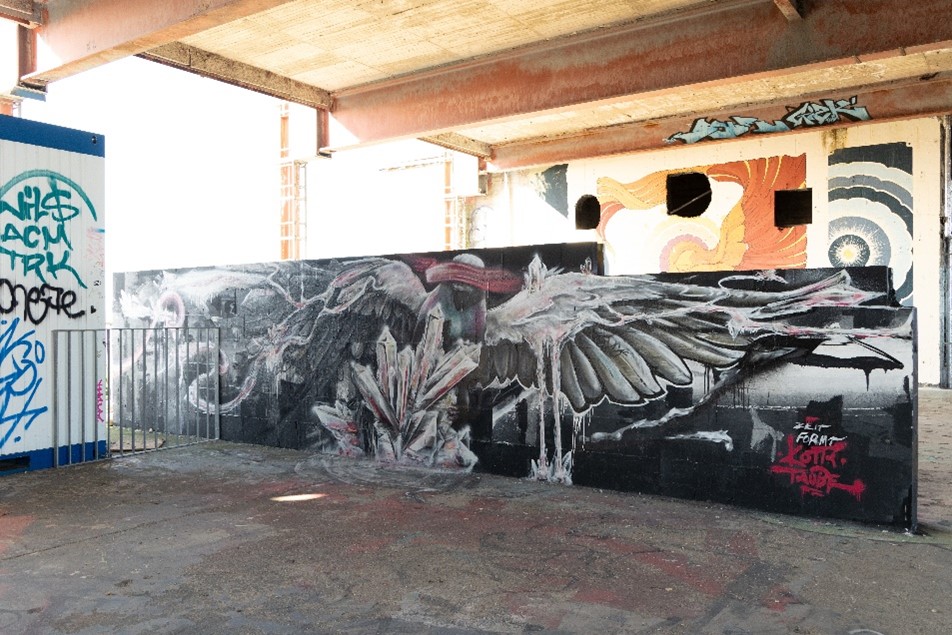
On the second floor of the Teufelsberg tower, KOTTITAUBE has created another remarkable piece: a monumental urban pigeon with an expansive wingspan. Notably, the pigeon’s face is hidden—obscured by a red line that acts like a barrier or dividing mark. This detail invites interpretation: it could symbolize the invisibility and silence faced by urban pigeons and people alike, particularly those in marginalized or conflict-laden environments. It serves as a reminder of how easily individuals can be overlooked or pushed to the fringes.

The crystalline structures surrounding the pigeon, reminiscent of shattered glass or ice, enhance the contrast between strength and fragility. They seem to represent both obstacles and the beauty that can emerge amidst danger. This dynamic tension makes the artwork a visual metaphor for the challenges of urban life or conflict-ridden contexts.

This mural reflects KOTTITAUBE’s signature style: an exploration of contrasts such as strength and fragility, visibility and invisibility. The pigeon, a symbol of adaptability and resilience, remains an enigma, challenging viewers to look deeper and derive their own interpretation of the intricate message.

Through his works at Teufelsberg, KOTTITAUBE demonstrates not only his artistic skill but also his ability to convey complex ideas through subtle symbols and powerful imagery. His pigeons stand for resistance, adaptation, and the relentless pursuit of freedom—both in Berlin and around the world.

Fabifa – Redefining Tape Art

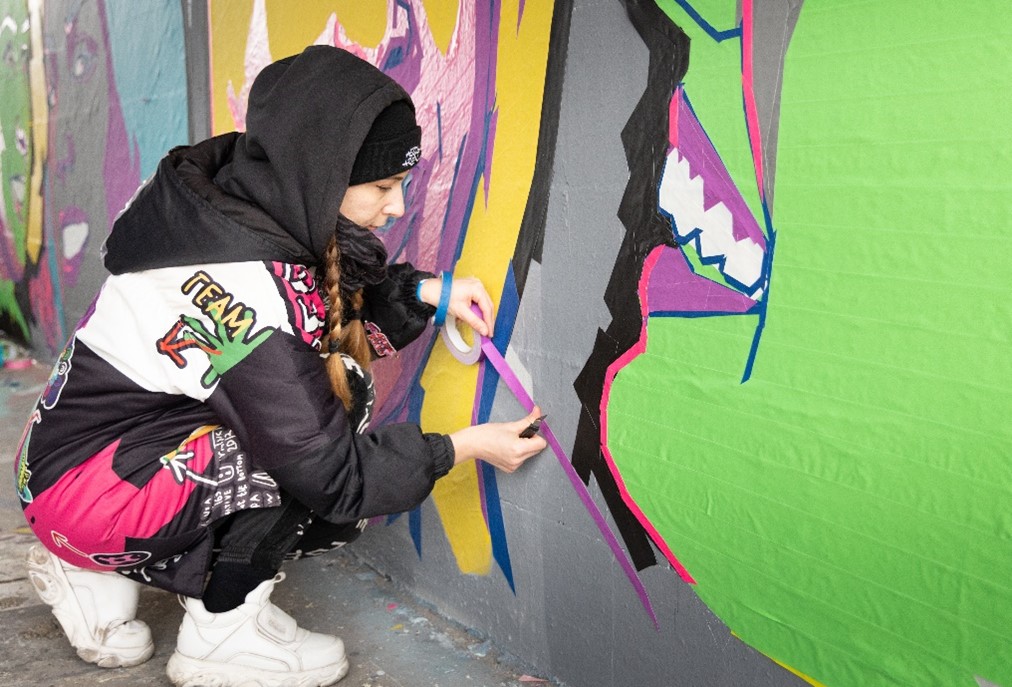
When you think of street art, tape might not be the first medium that comes to mind—but for Fabifa, it is the perfect tool. She proved this at Teufelsberg, where her extraordinary tape art brought an impressive vision to life. Her works combine clean lines, vibrant colours, and profound messages, transforming tape into a surprisingly powerful form of artistic expression.

Friendship in Focus

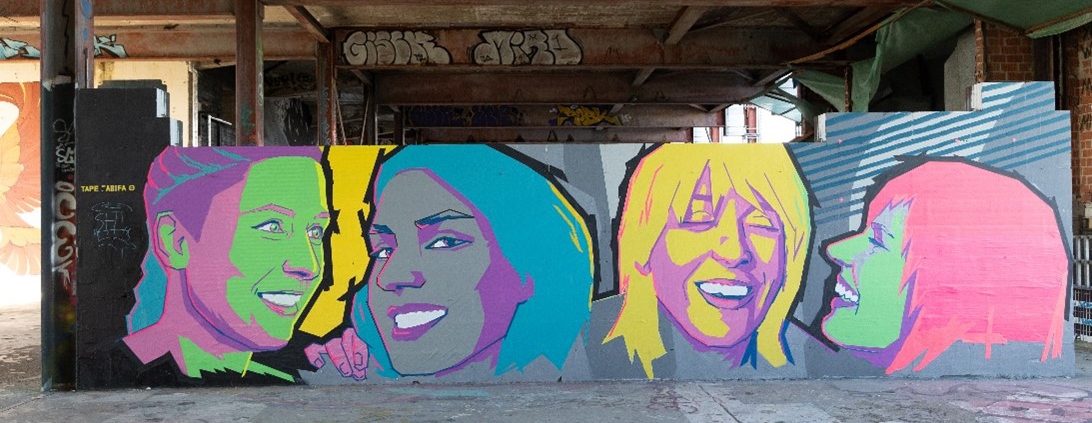
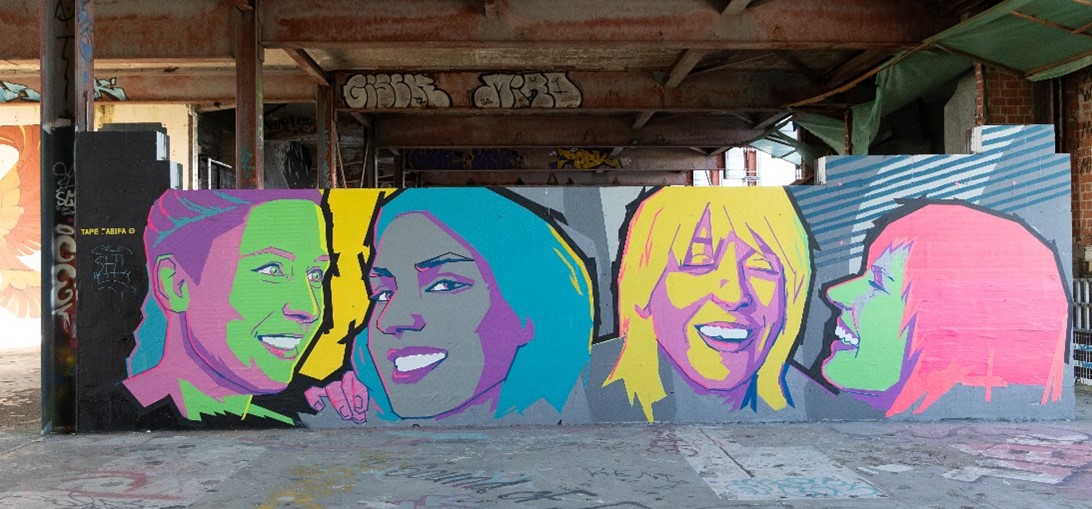
At the Power of Female Art Festival in March 2024, celebrating International Women’s Day, Fabifa created a piece titled “Female Friendship.” This artwork is a deeply personal statement, featuring Fabifa herself (on the left) alongside her three closest friends, who have been a part of her life for years. “We have been best friends for years, and I thought today was the perfect opportunity to depict and celebrate female friendship,” she explains.

Using her signature medium—tape—Fabifa crafted figures that radiate dynamism and joy through vibrant colours and precise lines. Bold shades of pink, yellow, and turquoise capture the energy and strength of female relationships. The figures’ smiles convey a sense of intimacy and shared happiness. What’s particularly remarkable is how Fabifa uses the interplay of geometry and colour to imbue each figure with emotion and personality.

The piece invites viewers to reflect on the power of friendship—the people who support and inspire us. It is not just an artistic homage but an emotional celebration of the connections that enrich our lives.

Fabifa’s Journey to Artistic Fulfillment

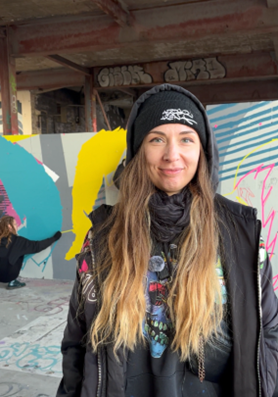
Behind the name Fabifa is Valeryia Losikava, born in 1987 in Minsk, Belarus. In 2015, she moved to Berlin—a city that offered her freedoms she had never known before. “Freedoms of self-expression, self-realization, sexuality, and politics,” she describes, highlighting the transformative impact of her new home.

Fabifa’s art is defined by precision, emotion, and a unique sense of colour and form. She draws inspiration from Berlin’s club culture, Soviet poster art, Japanese woodcuts, and her own personal history. This fusion of traditional influences and modern perspectives results in a style that’s entirely her own.

For Fabifa, art is much more than a form of expression—it is a message. “My work tells stories of freedom and transformation. It is my way of making emotions and personal experiences visible,” she explains.

Breaking Chains

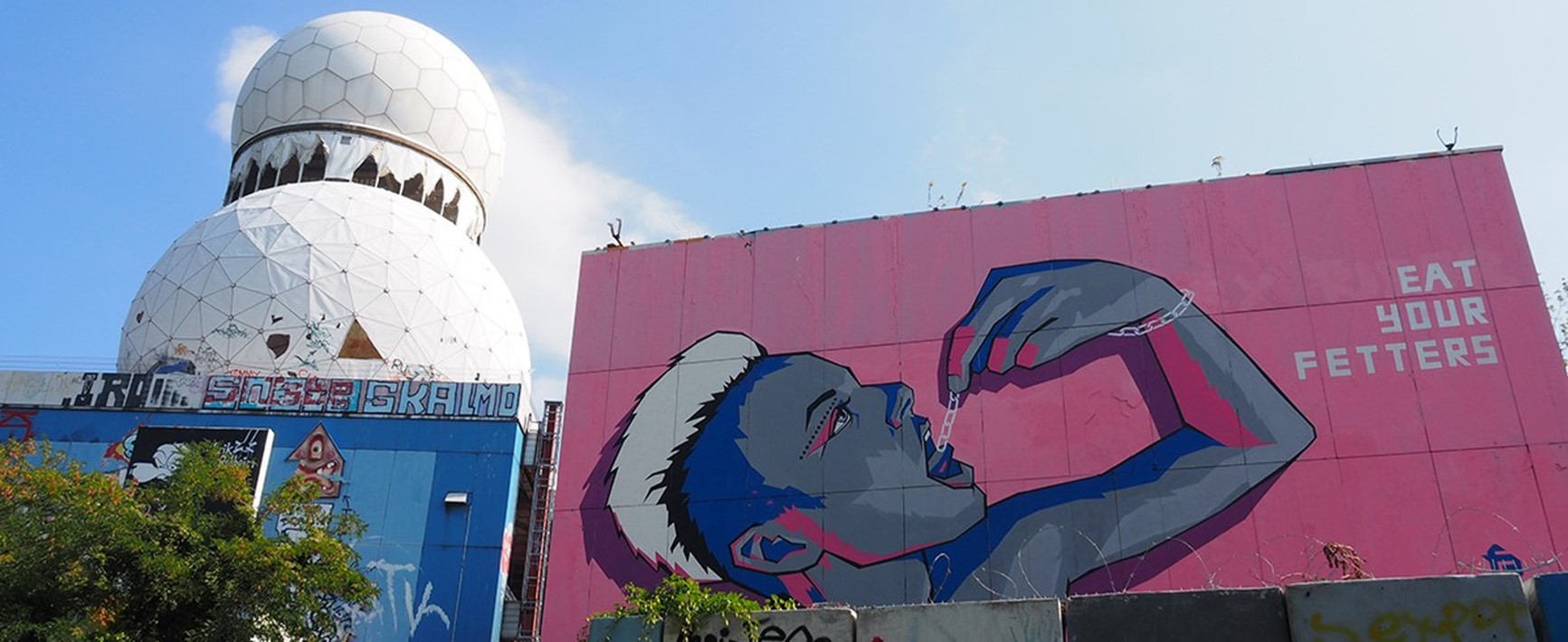
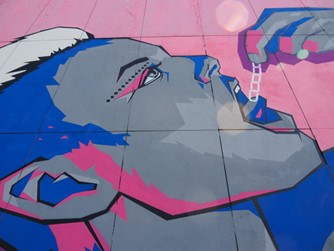
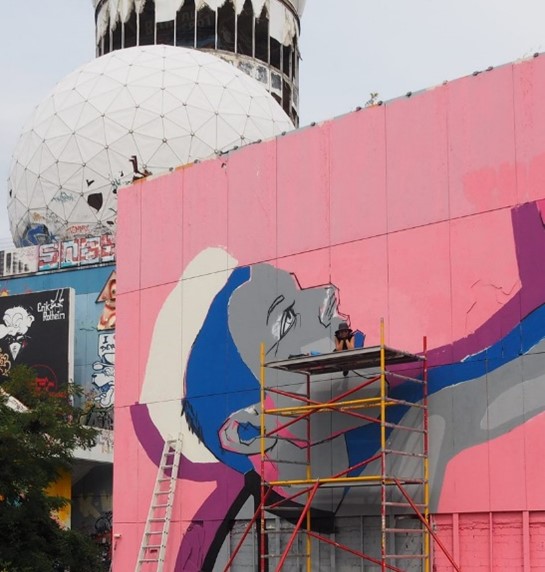
In 2019, Fabifa created a monumental wall piece at Teufelsberg, tackling the theme of breaking free from gender stereotypes. The 20-meter-tall artwork featured a figure symbolically breaking chains—a powerful image of overcoming societal constraints.

Her use of bold colours—pink, blue, and grey—challenged traditional gender associations and deliberately questioned them. The provocative text, “Eat Your Fetters,” encouraged viewers to liberate themselves from limitations and embrace individuality.

Although this piece no longer exists and cannot be seen on-site, it remains a significant milestone in Fabifa’s artistic journey. Its message continues to resonate as part of Teufelsberg’s history and as a symbol of courage in questioning societal norms.

Fabifa Inspires Berlin

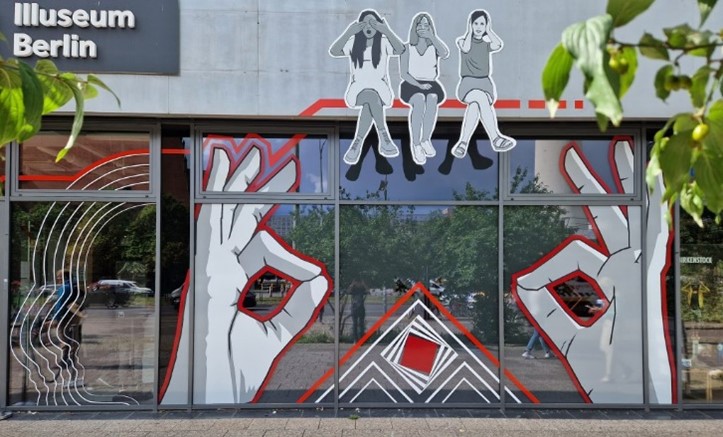
Fabifa’s innovative tape art has left a significant mark on Berlin. In 2023, she designed the facade of the Illuseum Berlin, incorporating interactive elements like hands, negative spaces, and a red heartbeat line, perfectly blending illusion and emotion.

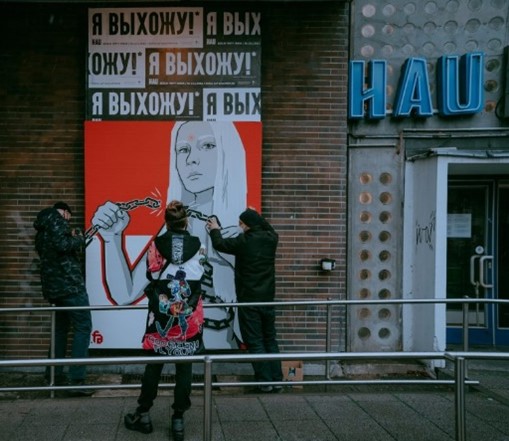
In 2021, during the global lockdown, she created a powerful political work for the Hebbel am Ufer Theater, addressing the pro-democracy protests in Belarus. Her facade became a striking symbol of social change and political resistance.

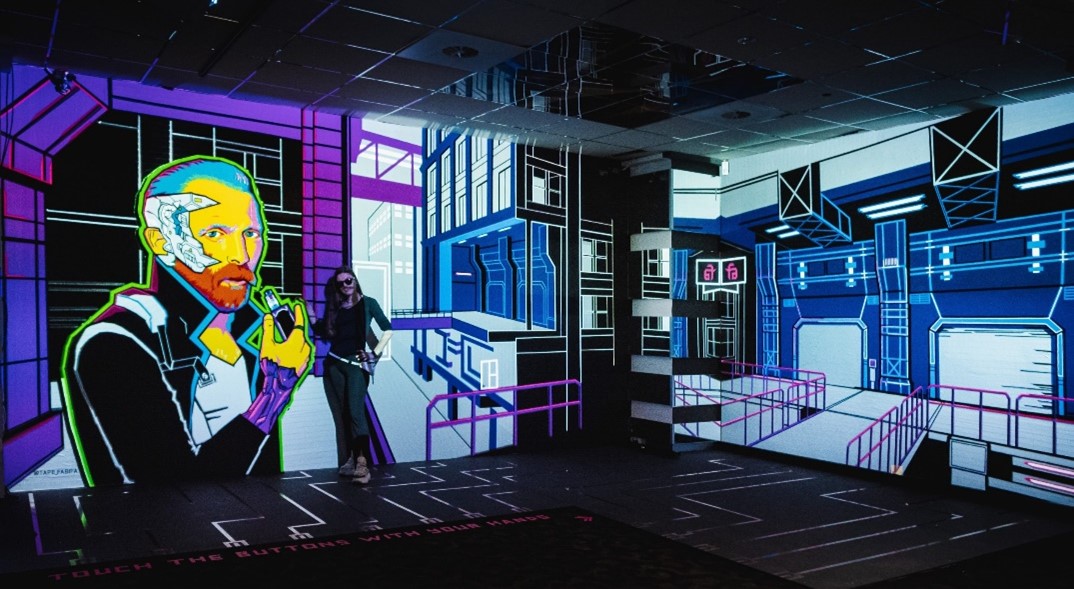
Another standout project was her futuristic installation, “Project Cyberbase,” at the Game Over Exhibition in Luce Studio. This piece combined tape art with music, projections, and interactive elements, creating a unique, multisensory experience.

Through these projects, Fabifa has shown that tape art is far more than a visual medium. She has transformed it into a platform that unites emotions, social issues, and creative visions in a way that’s truly groundbreaking. However, for Fabifa, these accomplishments are just the beginning. She plans to push her artistic boundaries even further, explore new materials, and share her messages with audiences around the world. Her art remains a testament to the power of creativity and its ability to inspire change and connection on a global scale.