Letter N – DYR – Freedom and Pop Art in an Urban Context

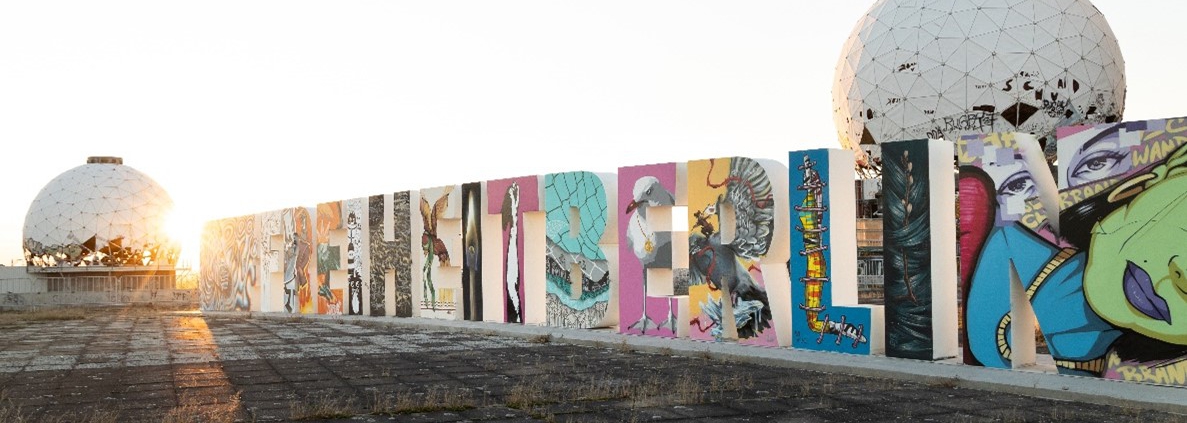
Teufelsberg, a symbol of Berlin’s cultural diversity, serves as a unique canvas for artists to express their messages in remarkable ways. One such artist is Damian Yves Rohde, better known as DYR, whose contribution to the #FreiheitBerlin installation reflects his distinct style and creative vision.

“Glitch Bitch”: A Statement on Freedom and Diversity

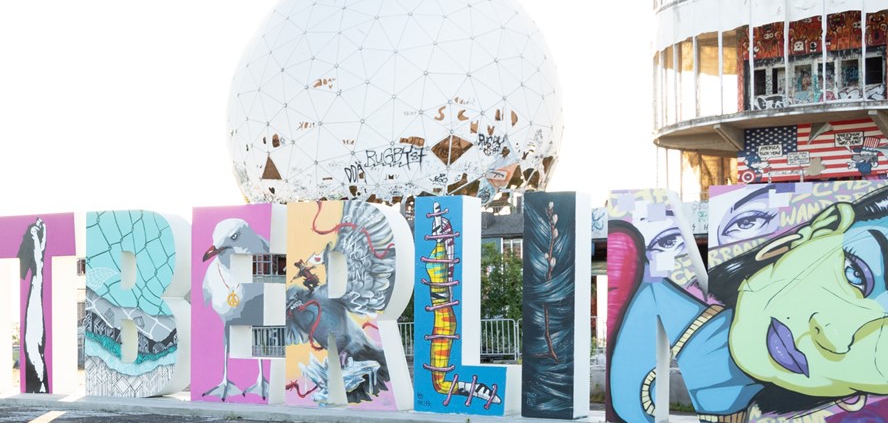
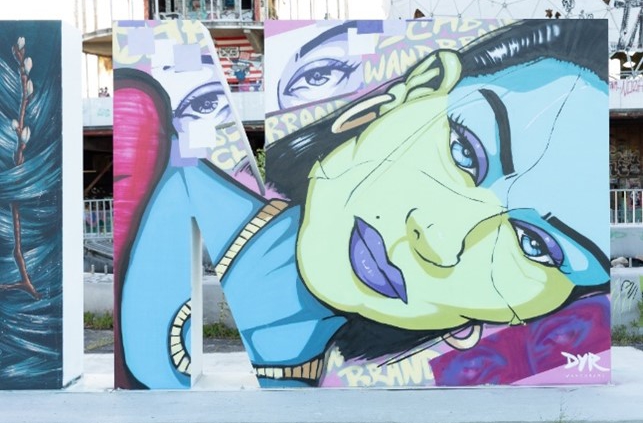
The letter “N” in the #FreiheitBerlin installation, titled Glitch Bitch, embodies DYR’s interpretation of freedom. For him, freedom means the ability to “do and say what you want, as long as you don’t harm anyone. It’s a foundation, a basis where people don’t have to agree but can present their views and argue in a respectful way.” His work emphasizes respect for gender, religion, clothing, and lifestyle—independent of personal preferences.
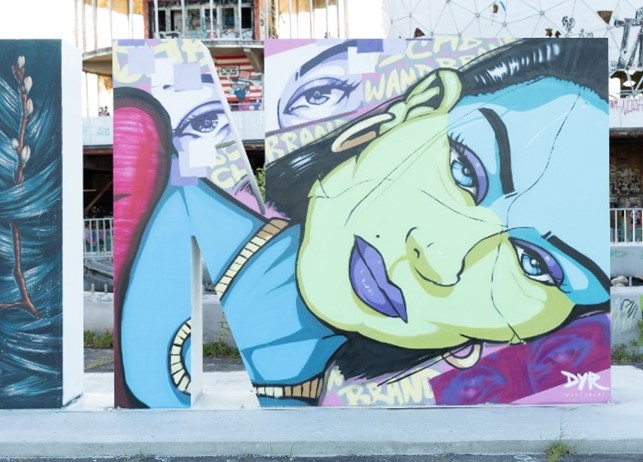
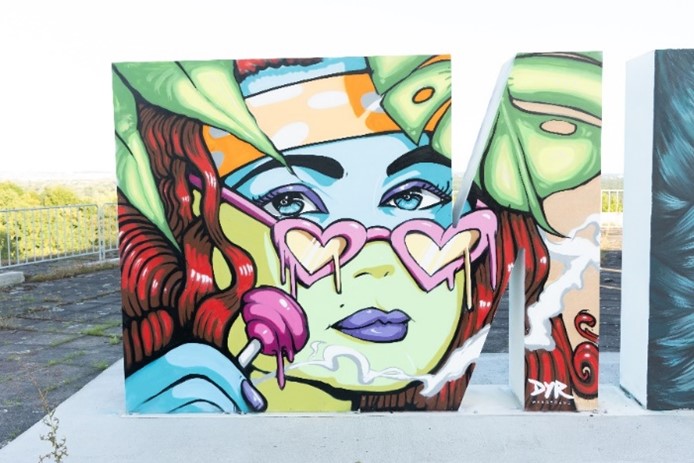
The design of the “N” stands out with its vibrant colours, bold contrasts, and dynamic forms. The faces depicted, characteristic of DYR’s style, exude energy and emotion. The bright colour accents and glitch-inspired patterns in the background lend the piece a modern, digital aesthetic that is both playful and socially relevant. This fusion of pop art and social commentary makes Glitch Bitch a perfect representation of freedom within the Berlin context.

As DYR explains: “Berlin is a place where anyone can walk around as they please and say what they want, as long as they remain respectful.” This essence of tolerance and individuality shines through in his work.

From West Berlin to International Recognition

Born in 1985 in West Berlin, Damian Yves Rohde grew up in a multicultural environment that deeply influenced his artistic journey. Raised in the vibrant Kreuzberg and Schöneberg art scenes, he was surrounded by budding and established artists, which fostered his early passion for art. The graffiti culture on the Berlin Wall and exhibitions he attended further shaped his creative development.

Since 2020, DYR has leaned further into pop art, developing a unique style. He abstracts faces from his close circle, reducing them to essential features while maintaining their recognizability. His work is both deeply personal and universally relatable, earning him recognition not just in Berlin but also internationally, with exhibitions in Paris, London, and other cities.

Between Wildness and Individuality

In addition to his contribution to the #FreiheitBerlin installation, DYR created another remarkable piece in the Gallery Tower at Teufelsberg. This mural combines human and animal elements in a dynamic display of his pop art aesthetic.

At the centre of the mural is a stylized bear’s head, complete with bright orange sunglasses and a wide-open mouth showcasing sharp teeth. The bear is simultaneously aggressive and playful, symbolizing Berlin’s untamed energy, wrapped in a modern cultural vibe.
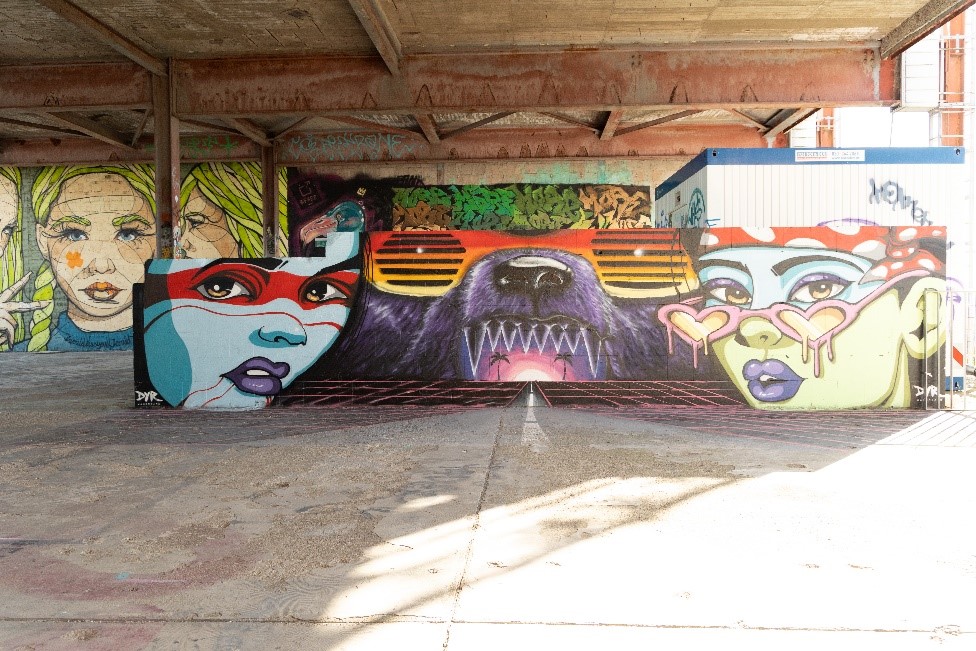
Flanking the bear are two abstracted human figures, crafted in the same distinctive style as the faces on the letter “N.” Their vibrant colours, striking facial features, and playful accessories demonstrate DYR’s unique interpretation of individuality and diversity. The connection between the mural and the “N” underscores DYR’s consistent artistic identity, weaving a recognizable thread through his works.

The mural’s background features deep, rich tones that enhance the boldness of the figures and the bear, creating a striking visual impact. This stylistic continuity between the letter and the mural showcases how DYR translates his signature approach across different formats, while still telling new stories.
Karskione – When Art, History, and Music Unite

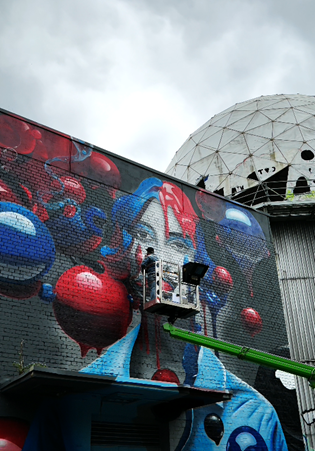
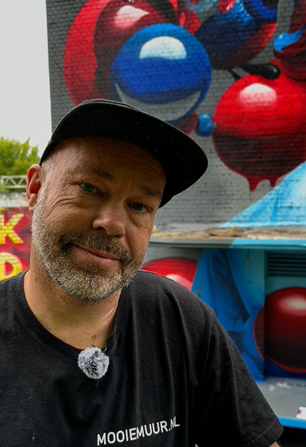
At Teufelsberg in Berlin, art and history blend seamlessly to create a one-of-a-kind space where creativity knows no bounds. In May 2024, during the Live Street Art Week, Dutch artist Karski Roy Valk, known as Karskione, created a stunning mural that connects history, music, and art in a deeply impactful way.

A Tribute to History and Symbolism

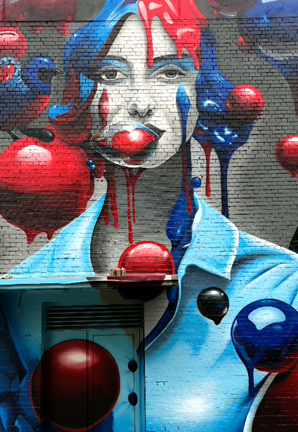
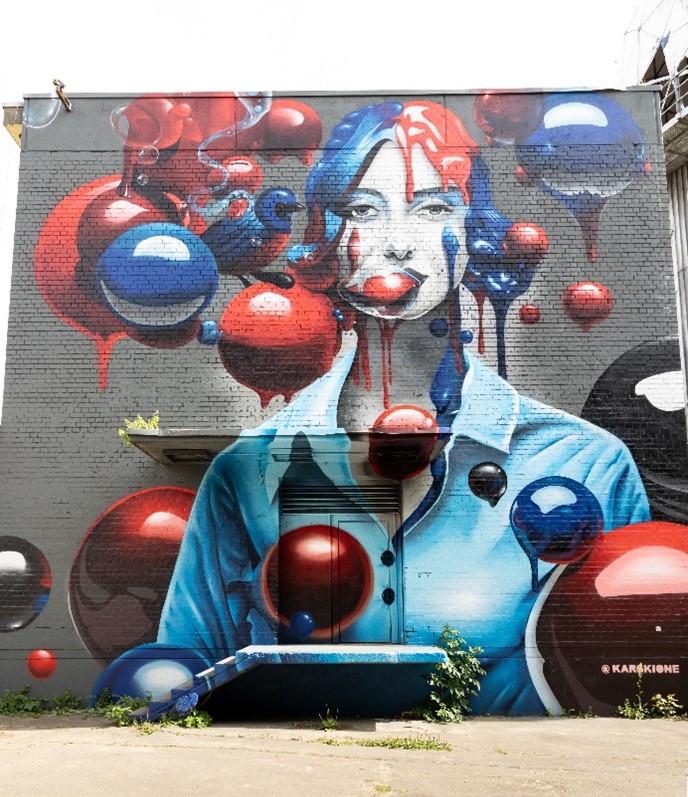
Karskione’s mural immediately draws attention: a woman with a pensive, melancholic expression surrounded by floating red and blue balloons. On closer inspection, you can count exactly 99 balloons—a direct nod to Nena’s iconic song “99 Luftballons.” The song, which addresses surveillance and tensions during the Cold War, resonates deeply with the history of Teufelsberg, once a radar station used to monitor Soviet activity.

Karski explains his inspiration: “This place was used in the past to monitor the Russians. Whenever I’m in Germany, I always think of this song. It was the perfect location to bring this idea to life, especially with the large white balloons that were once part of the radar systems.

The mural showcases Karskione’s signature style: a harmonious balance of abstract elements and realistic depiction. The floating balloons evoke a sense of lightness, while paint drips and intricate details give the mural vibrancy and motion. The palette of blues and reds enhances the nostalgic yet timeless feel of the artwork.

However, this mural is more than just a visually striking piece. It is a reflection on the history of Teufelsberg and the themes of freedom and surveillance. Through this work, Karskione encourages viewers to contemplate the past while connecting it to a universal message of liberty and peace.

A Life Dedicated to Art

Born in the Netherlands, Karskione is a prominent figure in the international graffiti and street art scene. His artistic journey began at the age of 10, sneaking out at night to spray-paint his first creations. This early passion never waned and has since propelled him to global recognition as an artist.

His distinctive style combines photography and graffiti, creating works that are both deep and visually striking. Known for vibrant colors, dynamic details, and boundless creativity, Karskione’s pieces bridge the abstract and the realistic in unique ways.

Yet, his art goes beyond aesthetics. Karskione is actively involved in charitable projects, working with orphaned children and creating murals in countries like Zimbabwe to convey social messages and empower communities. Each of his works tells a story—of the past, the present, and the hope for a better future.

Letter I – Caro Pepe – Creativity that Moves and Inspires

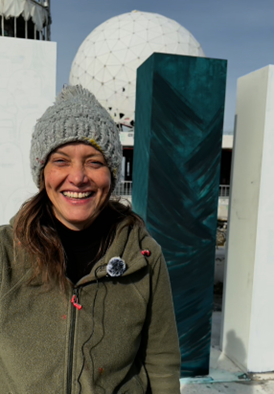
At Teufelsberg, history meets contemporary art—a place where creative visions come to life and visitors leave inspired. One artist who has left a lasting impression here is Caro Pepe. Originally from Argentina and living in Berlin since 2012, Caro Pepe has created two remarkable works: the letter “I” for the #FreiheitBerlin installation and the mural “Rebellion in the Carousel” as part of the 2024 Power of Female Art Festival.

A Visual Meditation

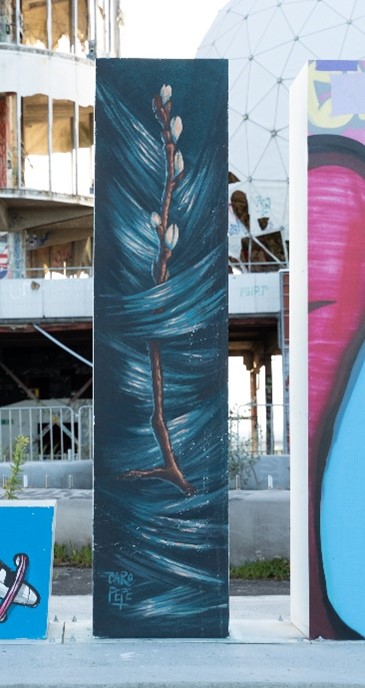
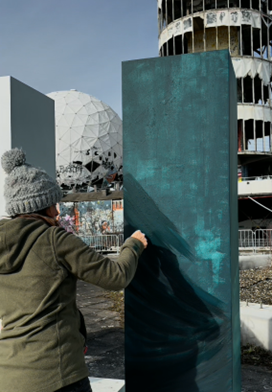
Caro Pepe’s contribution to the #FreiheitBerlin installation explores the concept of freedom in its most profound and emotional sense. Her letter “I” is not just a visual piece—it is a philosophical one. For Caro, art is freedom: the freedom to express emotions, organize thoughts, and let go of burdensome ideas. She describes her creative process as a meditative act: “Art makes me feel lighter, it fulfills me, and it frees me from unwanted things.”

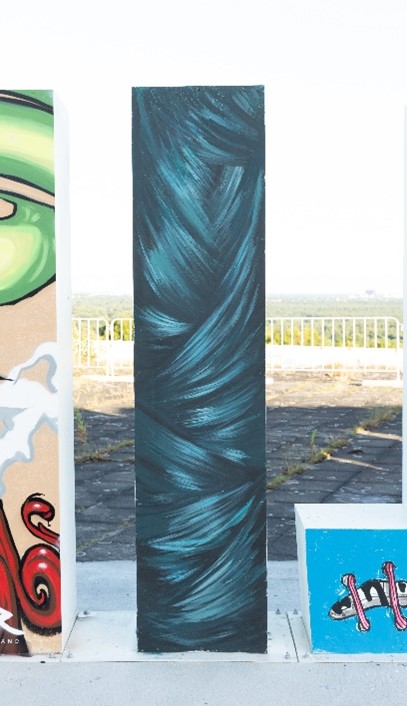
The background of her work features fluid, vibrant brushstrokes in varying shades of blue, creating a sense of powerful motion—almost as if an invisible wind sweeps through the piece. This dynamic structure gives the letter an energy that symbolizes freedom as movement and transformation.

At the center of the letter, a branch with budding leaves emerges, representing growth, renewal, and breaking free from rigid structures. These buds seem to grow directly out of the swirling background, suggesting an organic emancipation driven by inner forces. This interplay between the dynamic backdrop and the organic center showcases Caro Pepe’s skill in weaving visual and emotional layers. For her, this piece is a reflection on freedom as an internal journey: “Freedom that releases us from heavy thoughts and freedom that allows us to grow.”

Introspective Art

Caro Pepe’s artistic journey began in advertising, where she worked as an art director in Buenos Aires and Madrid before committing fully to her passion for art. After moving to Berlin in 2012, she launched her career as a freelance artist and muralist, painting and exhibiting her work worldwide—from Europe and South America to Asia.

Her art is characterized by an intimate engagement with emotions, with her iconic “One-Eyed” women being a recurring motif. These figures represent subjectivity and personal perception of reality. “We all see only a part of the truth and define our world based on that,” she explains. This introspective perspective runs through her entire body of work, making it both deeply personal and universally resonant.

Strength and Transformation

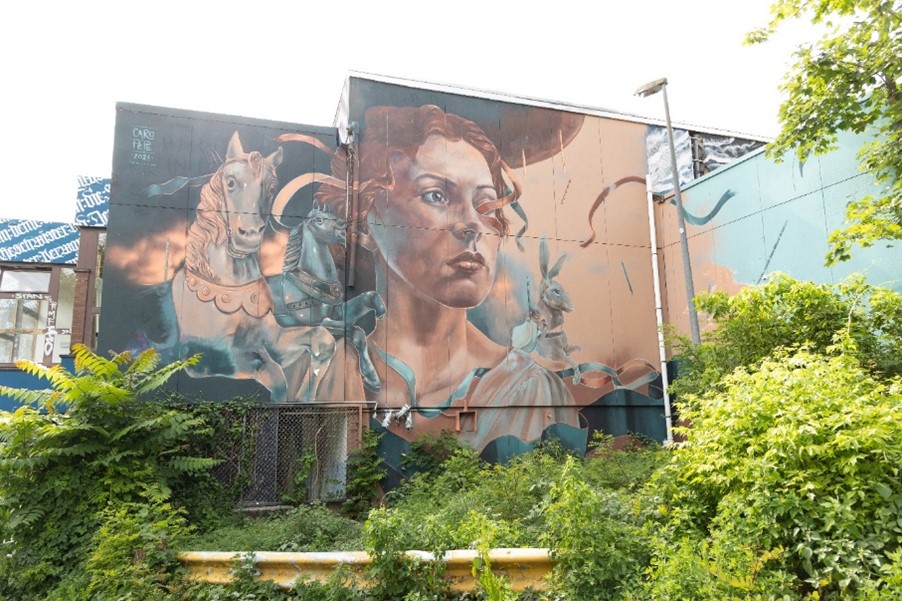
In addition to the letter “I,” Caro Pepe created the striking mural “Rebellion in the Carousel” during the 2024 Power of Female Art Festival. Painted on the wall of the former canteen, this piece tells a story of resilience and breaking free from old patterns.

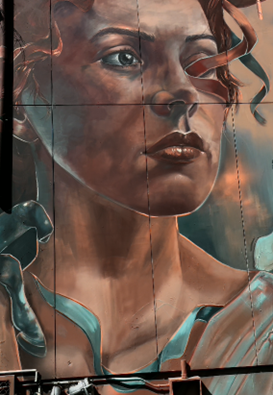
At the center of “Rebellion in the Carousel” stands the one-eyed woman, surrounded by a crumbling carousel—a metaphor for endless cycles and repetitive routines. She actively dismantles the carousel, and its fragments and loose ribbons visually capture the moment of liberation. The woman exudes determination and strength; her upright posture and intense gaze, even with only one visible eye, convey both depth and resolve.

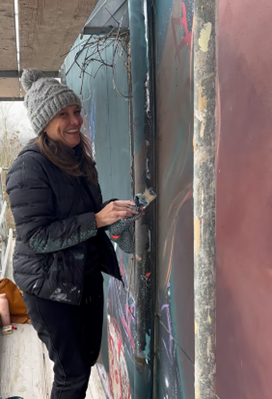
Caro Pepe’s technical approach enhances the drama and symbolism of the piece. Using spray paint, acrylics, and wall emulsion, she brings movement and vitality to the scene. The warm copper tones combined with cool blues create a compelling contrast between the stability of the central figure and the chaos of the collapsing carousel. Up close, intricate details like the ornate manes of the carousel horses become visible, while from a distance, the mural reveals its full, commanding presence.

This mural is not just a visual masterpiece but also a profound symbol of courage—the courage to break free from entrenched patterns. It invites viewers to reflect on their own cycles and inspires them to take the leap toward transformation.

The Letter L – RON MILLER – The Visionaries Behind the Geisha

At Teufelsberg, artists from around the world bring history and art to life through their works. One standout piece is the letter “L” from the #FreiheitBerlin installation, created by the Berlin-based artist duo RON MILLER. With their unique blend of urban style, conceptual art, and symbolism, they tell stories of freedom, identity, and inner strength.

Captured Yet Free

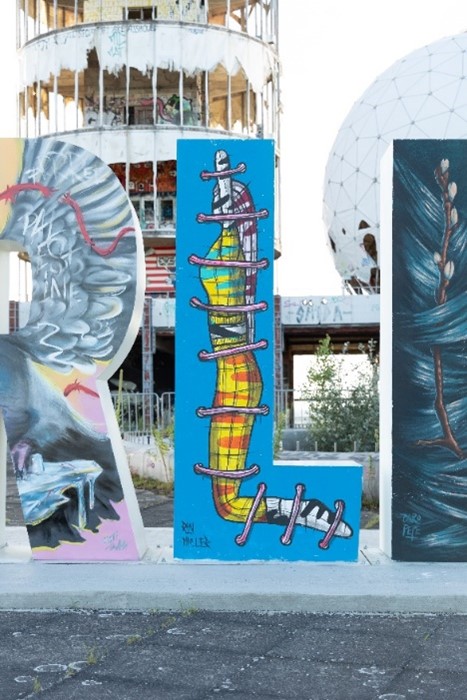
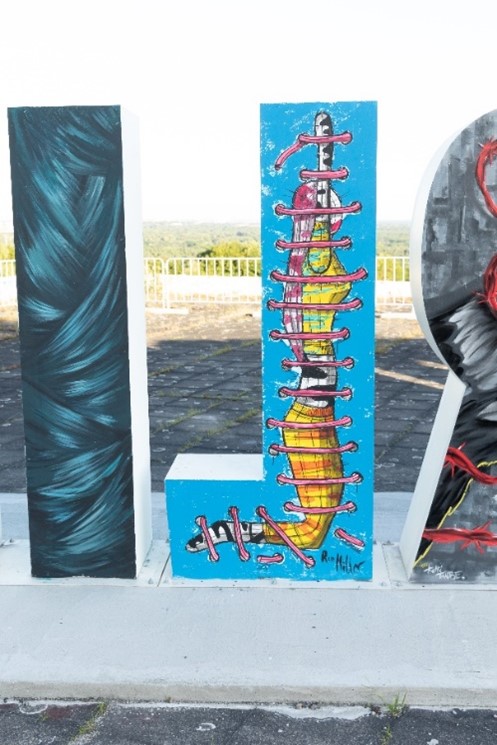
The letter “L” immediately catches the eye with its vibrant colours and powerful symbolism. At its centre stands a yellow figure, bound by pink ropes – a clear metaphor for restriction. Yet, the deeper meaning lies in the details: the figure, whose stylized form evokes RON MILLER’s iconic Geisha, conveys a sense of boundless inner freedom. Despite external constraints, her spirit remains unbroken and free.

The duo describes their vision as follows: “Freedom means having the ability to think, act, and decide without pressure or limitations. Our protagonist is figuratively tacked onto the letters. Her body may be trapped, but her thoughts wander into boundless realms. In her mind, freedom blooms – unbound and infinite – while her body remains held in place. Her soul dances in the light of endless possibilities, free as the wind.”

The Geisha, a central motif in RON MILLER’s work, perfectly encapsulates this message. Inspired by a past love and a deep appreciation for Asian culture, the motif has evolved over the years. Today, the Geisha represents a dynamic, urban identity that adapts to different contexts. Her face, often left as a blank white space, invites viewers to project their own interpretations and experiences onto the figure.

Two Friends, One Vision

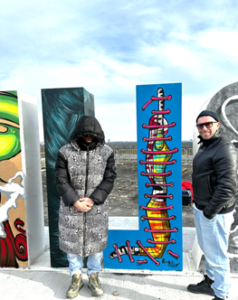
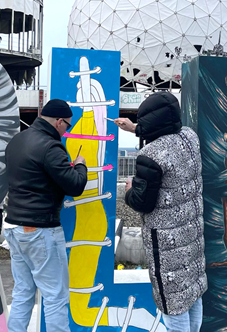
Behind RON MILLER are best friends Ronny Kindt and Marcus Klüh, whose longstanding friendship forms the foundation of their creative vision. Since 2016, they have combined their individual strengths to create a unique artistic style. Marcus Klüh grew up as a creative child who loved to build things with his hands. This craftsmanship is evident in many of their works. Ronny Kindt, with a background in graphic and interior design, has worked as a creative director for over a decade. His passion for design and Asian culture plays a significant role in their art.

Their work combines urban aesthetics, pop art, and conceptual depth. The recurring motif of the Geisha and their ability to address societal themes like commercialization, identity, and freedom make their art both striking and thought-provoking.

Bold, Yellow, and Critical: Artwork at the Tower

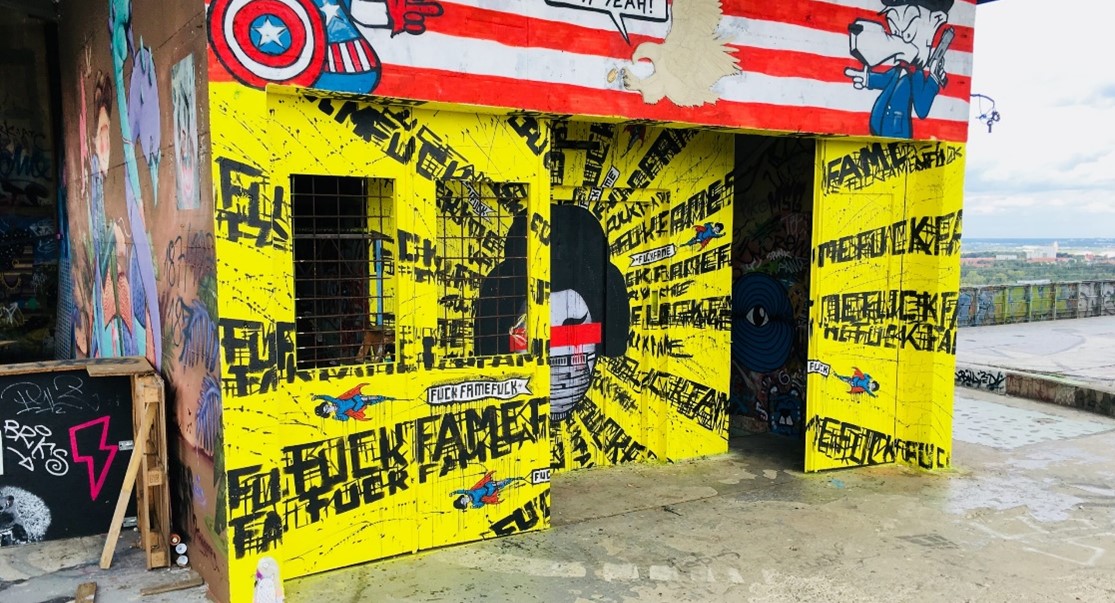
Another notable work by RON MILLER once adorned the entrance of the tower at Teufelsberg, though it no longer exists. Painted in vivid yellow, the piece prominently featured their provocative motto “FUCK FAME”, which stretched across the wall as a graphic element. Through this slogan, RON MILLER criticizes the superficial glorification of fame and popularity in a world where art and culture are increasingly commodified and digitalized. At the same time, the motto is ironic – a call to focus on authenticity and creative freedom.

At the centre of the work was a large Geisha with a red rectangle covering her eyes and wearing a mask reminiscent of a protective face covering. This detail subtly connected the artwork to contemporary societal themes. The scene was completed by numerous smaller Geishas dressed as Superman or, more fittingly, Superwoman, breathing life into the wall and reflecting the complexity of modern identity.

RON MILLER’s contribution to the #FreiheitBerlin installation, along with their other works, demonstrates how art can reflect and interpret societal themes. Their use of the Geisha as a central motif represents the fluid and ever-changing nature of urban identity. At the same time, their works are deeply ironic, layered, and provocative, encouraging viewers to engage with the questions and challenges of our time.