Madcins – Psychedelic Street Art Meets Berlin’s Underground

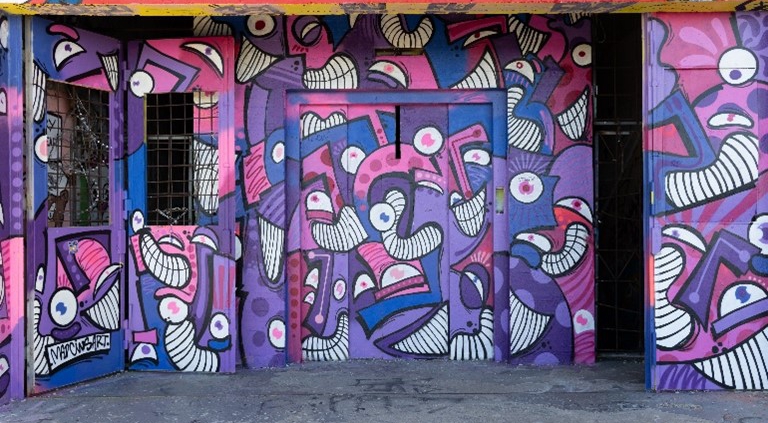
High above the rooftop terrace of Teufelsberg, a new, electrifying artwork has been shining since May 2024: the mural by Madcins, created during the Live Street Art Week 2024. With vibrant colours, hypnotic eyes, and wide grins, it immediately grabs attention. But behind this playful façade lies something much deeper—an intense exploration of contrasts, emotions, and the unique atmosphere of Berlin.

Psychedelic Visions in Pink and Purple

Madcins describes his work as a fusion of psychedelic eyes and broad, slightly eerie grins, dancing across the wall in bold, vibrant hues. His style blends bright colours and surreal elements, perfectly aligning with Berlin’s underground culture: “I chose a psychedelic style because – from my point of view – it fits the vibe of Berlin’s underground scene: strong techno beats, freedom, excess, and a sense of losing control.”
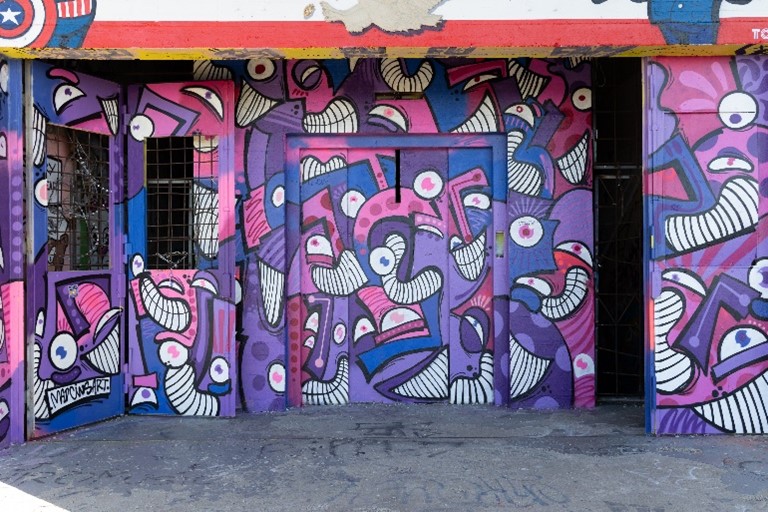
The dominant pink was deliberately chosen to stand out against the city’s often grey backdrop. His mural plays with contradictions: between order and chaos, between the cold urban landscape and the wild energy pulsating through Berlin’s streets and clubs.
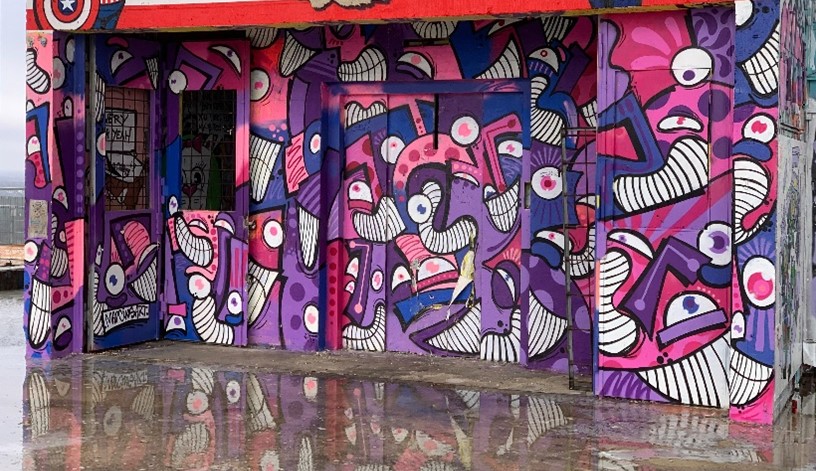
Madcins’ art is more than just a visual explosion—it mirrors the tension within the city itself. Berlin is raw, dark, and urban, yet at the same time, it’s full of creativity, freedom, and artistic energy. Through his striking, surreal figures, Madcins captures this dynamic perfectly, bringing it to life on the surface of the old surveillance station.

From Buenos Aires to Berlin

Behind the artist name Madcins stands Juan Manuel, born in 1991 in Buenos Aires. His journey into art began early—as a child, he struggled to follow rules and often found himself in difficult situations. But there was one thing that always helped him express his emotions: art. “Painting became my way to express myself when words couldn’t since it was the only thing that really understood me, especially during times when I felt out of place or misunderstood.”
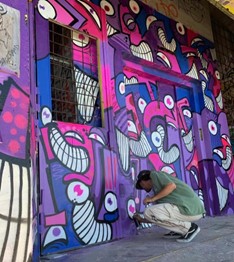
Over time, he realized that his art was not just a means of self-expression but also a bridge to connect with others and explore the deeper questions of life. His path took him across the globe, where he absorbed influences from Latin American street art, Asian craftsmanship, and the bold patterns and colours of European art.

Today, Madcins is based in Barcelona, where he focuses not only on large-scale murals but also on live art performances. What makes his approach unique is that his art isn’t confined to walls—he experiments with human bodies, clothing, and unconventional canvases to create immersive experiences. His goal is not just to create visually striking pieces but to make them interactive—he wants viewers to discover their own stories within his work and find a personal connection to the emotions and themes he expresses.

With his unmistakable artistic signature, Madcins has left his mark around the world, creating murals in Costa Rica, Argentina, Spain, Brazil, Mexico, and Germany. His art is a celebration of movement, intensity, and the boldness of contrasts.

His mural at Teufelsberg is another masterpiece in his portfolio—a work that not only transforms the architecture of the former listening station but also captures the pulsating energy of the place.
Traces of Time Photography Competition – The Winners (Places 6–15)

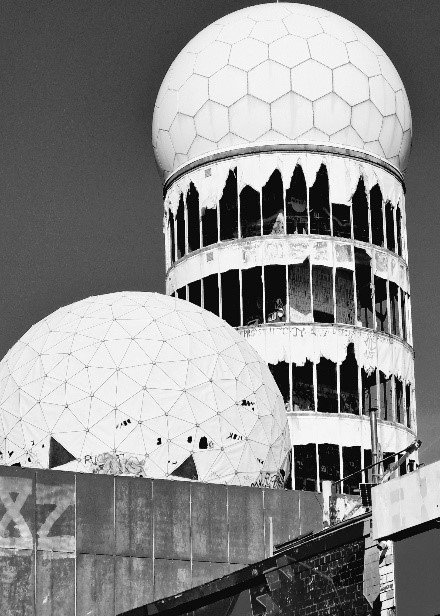
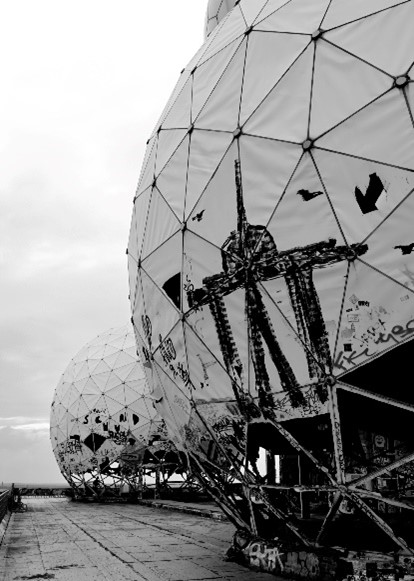
Teufelsberg is not just a place of history—it is a source of inspiration for artists and photographers alike. With its unique combination of striking architecture, urban art, and sweeping views over Berlin, it attracts thousands of visitors each year. In our photography competition, Traces of Time, numerous participants captured Teufelsberg from fascinating and often unexpected perspectives. An independent jury selected the 15 most outstanding images, which are now on display in our new exhibition. Today, we introduce the photographers who ranked between 6th and 15th place.

The Photographers and Their Works


Saskia Reichert

Saskia Reichert’s photograph stands out for its unique perspective on Teufelsberg, skillfully combining the site’s architecture with the surrounding natural elements.


Martina Pichotta

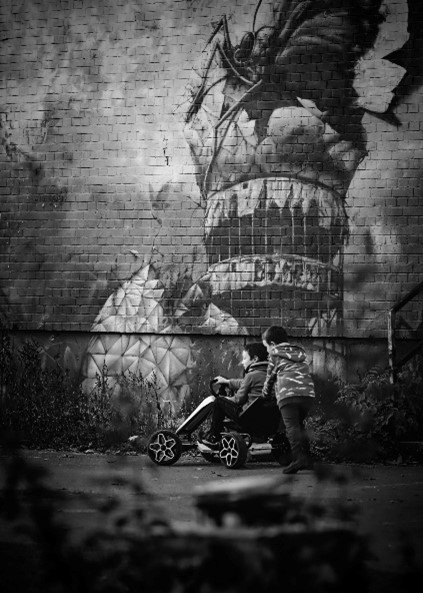
Martina’s photo captures a deeply personal moment. In October 2024, her best friend from Arizona visited Berlin with her daughter. Together, they explored Teufelsberg—a place that holds many childhood memories for Martina. Her image, originally taken in color, reflects the connection between past and present.


Claudia Hinze

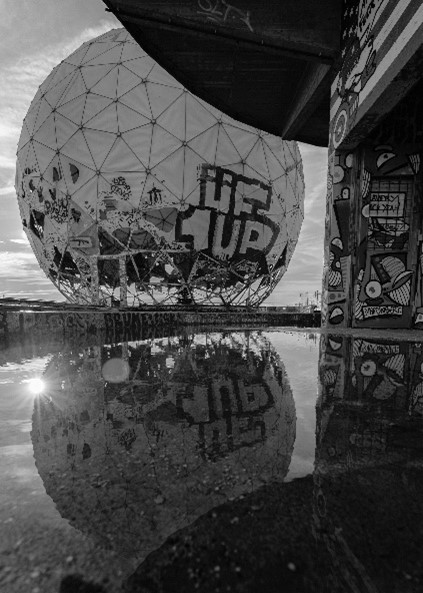
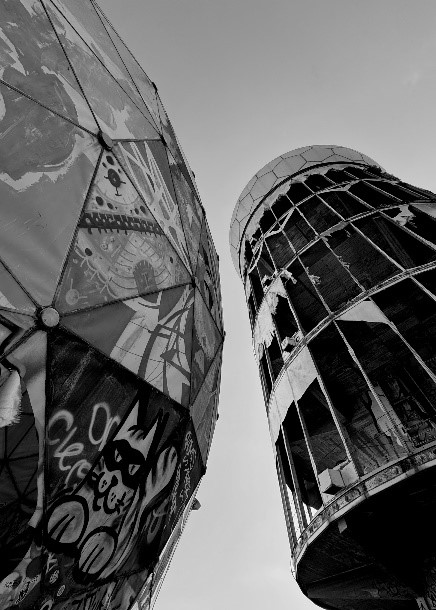
For many years, Claudia has been capturing special moments through her lens, both on film and digitally. Her competition entry was taken during her first visit to Teufelsberg. She was particularly fascinated by the way the towering radomes harmonize with the emptiness of the opposite side of the image. A graffiti piece in the foreground evokes associations with the Brandenburg Gate, playing with perspective and interpretation.


Sebastian Hiller

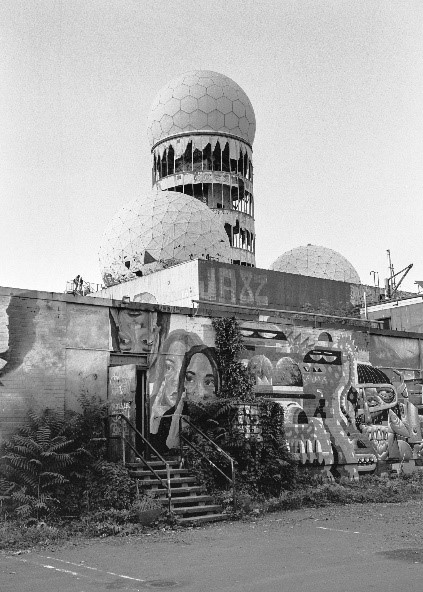
Sebastian took his photograph on a late afternoon in September 2023 using a medium-format film camera. The open doorway in the foreground, revealing the radomes in the background, immediately caught his eye. The dense vegetation and the relatively quiet atmosphere at that moment added to the site’s distinct lost-place character.


Denitsa Kusheva – The Forgotten Horizon

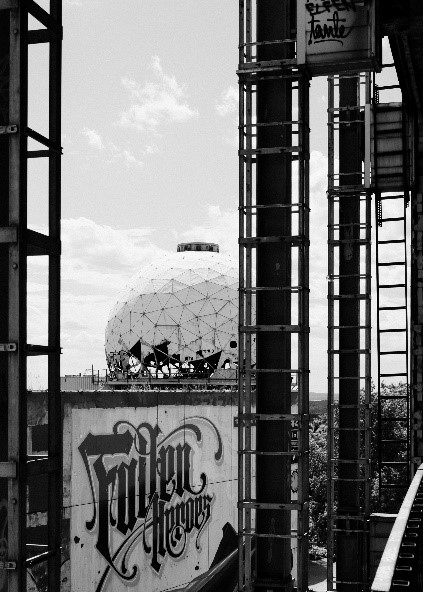
Denitsa, a UX designer from Bulgaria, combines her passion for photography with her love for discovering unusual places. Her photo, The Forgotten Horizon, captures Teufelsberg as a site in transition—caught between fading history and artistic reinvention. The industrial structure frames the ruined dome, creating an intriguing interplay of confinement and openness.


Enrico Licht

Enrico’s image encapsulates a unique atmosphere of the site. The details of his work remain open to the viewer’s interpretation.


Christiane Rakebrand – Digital Trace of the Past

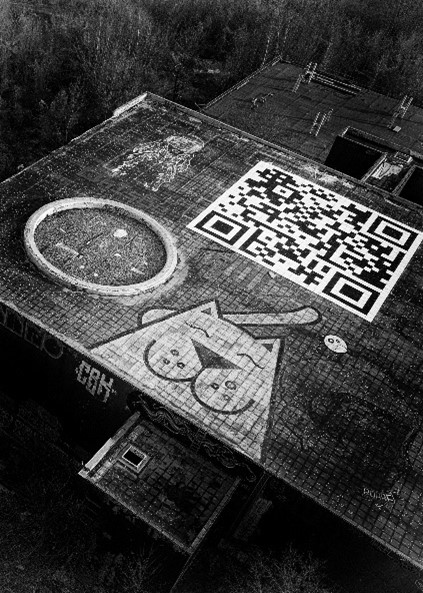
Christiane’s photo explores the concept of a QR code as a “digital trace of the past.” Once a symbol of modern technology, the code is now faded and links to an old Teufelsberg webpage. Her image illustrates the intersection of technology and time.


Andreas Langer

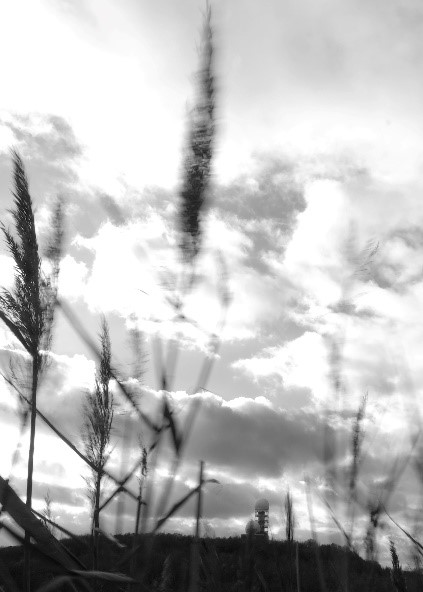
As a landscape planner, Andreas is particularly passionate about urban nature. In his photograph, Teufelsberg appears as a monument embedded in the natural cycle of growth and decay. The movement of the surrounding vegetation underscores the ever-changing character of the site.


Valerian Weber

Valerian’s work adds a distinctive perspective to the exhibition. Further details about his piece remain open for interpretation.


Sabine Skott – Far Far Away

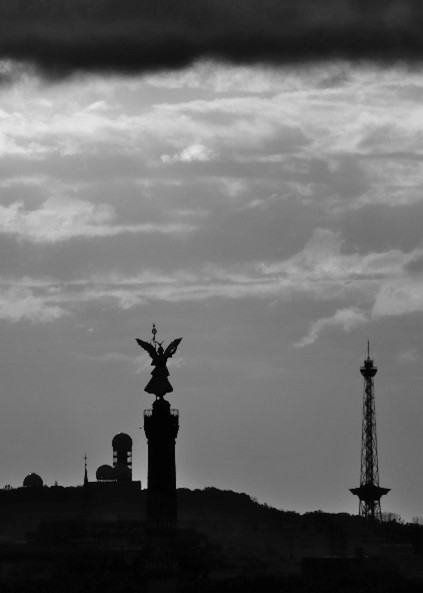
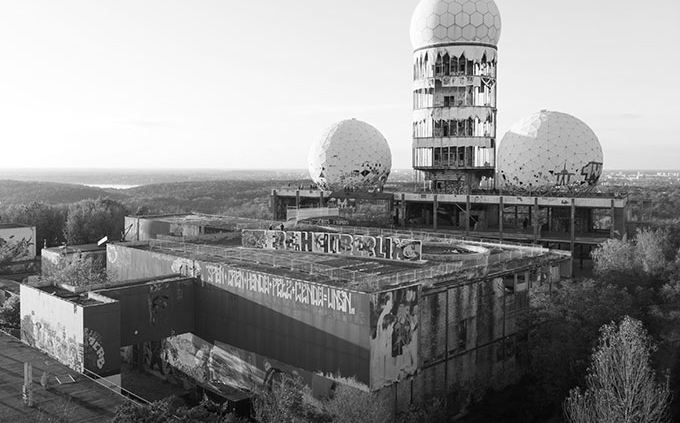
Sabine’s black-and-white photograph, Far Far Away, was taken from the rooftop of the Reichstag. It merges the silhouettes of Teufelsberg, the Trinity Church, the Victory Column, and the Radio Tower into a striking visual composition. In her image, Teufelsberg is no longer a peripheral landmark but a central symbol of Berlin—a silent monument bridging past and present.


The 15 winning images from our photography competition will be on display in Teufelsberg’s former canteen until February 23. This unique venue provides the perfect backdrop for an exhibition exploring the history and transformation of this extraordinary site. Our jury—comprising Hendrik Wolter, Vanessa Wunsch, and Stefanie Dörre—has carefully curated a selection that showcases Teufelsberg from new and inspiring perspectives.

We warmly invite you to visit the exhibition and follow the Traces of Time at Teufelsberg!

Land of Julia – A Brazilian Tribute at Teufelsberg

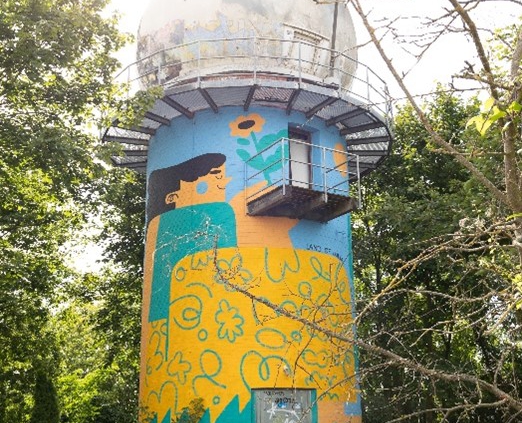
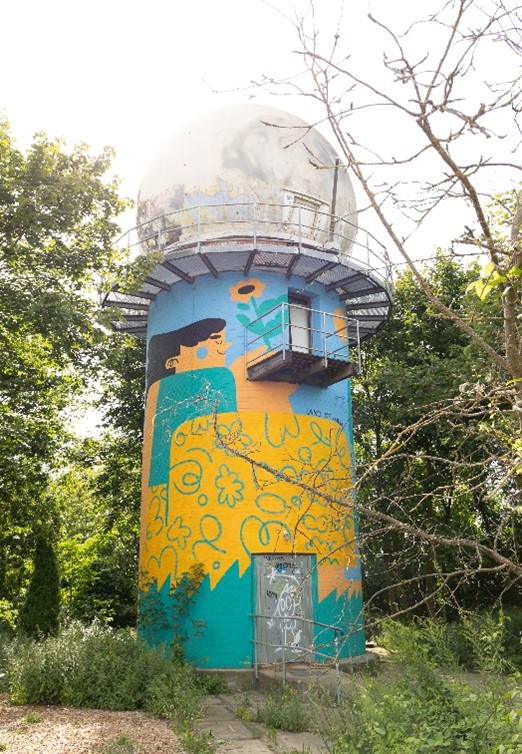
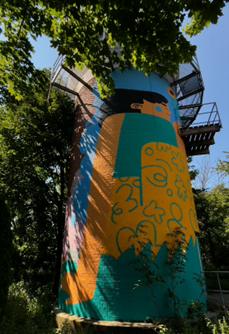
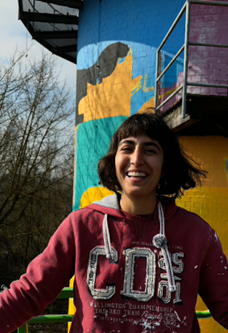
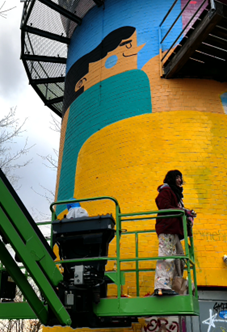
During the Power of Female Art festival in March 2024, the Jambalya Tower at Teufelsberg received a vibrant new look. Clearly visible from our bar, a colourful mural by Júlia Mota Albuquerque, better known as Land of Júlia, now adorns the striking structure. Her work merges Brazilian art history with her own illustrative style, creating a vivid statement of cultural diversity and female strength.

A Tribute to Tarsila do Amaral

For her mural at Teufelsberg, Júlia drew inspiration from one of Brazil’s most renowned painters: Tarsila do Amaral. In particular, her iconic piece Abaporú—widely considered one of the most significant works of modern Brazilian art—served as a key reference. Abaporú features an oversized figure seated in a vast landscape, surrounded by a cactus under a radiant blue sky. The colour palette—blue, yellow, and green—mirrors the Brazilian flag.

Júlia reinterpreted these elements in her own distinctive style. Her signature aesthetic, influenced by her background as an illustrator, is characterized by bold, flat shapes and a nearly cartoon-like appearance. The result is a contemporary take on Amaral’s work that not only pays tribute to Brazil’s artistic heritage but also establishes a visual connection between Berlin and Brazil.

The Power of Female Art festival celebrated women in art and made a powerful statement for greater visibility and equality in the art world. Júlia’s mural was a perfect example of the impact of female artistry—both as an inspiration and as an active contribution to the contemporary art scene. Her work at Teufelsberg is a striking testament to how female artists continue to shape history—both past and present.

Art Between Berlin and Brazil

Júlia Mota Albuquerque hails from Minas Gerais, a large state in southeastern Brazil. Though she currently resides in Berlin, she frequently travels between the two countries, whether for artistic projects or simply due to her passion for discovering new places.

Her artistic range is broad: she works on digital illustrations for branding, advertising, and publications, as well as large-scale murals and installations. Making art accessible to everyone is especially important to her. That’s why she is drawn to urban spaces, where her murals not only enhance cityscapes but also engage local communities.

Diversity and Unity as Core Themes

Júlia’s work revolves around themes of diversity, inclusion, and community. Her murals are not just visually striking—they carry a deeper message: they aim to bring people together and create a positive impact on the cities where they are displayed. This is why she is particularly drawn to bustling metropolises—she wants her art to be experienced, not just seen.

Beyond mural painting, she regularly experiments with new media. She illustrates, animates, paints objects, and explores textile techniques such as tufting. Her long-term goal is to create large-scale public installations—projects that go beyond art and foster interaction.

Júlia’s work can now be found in multiple countries. Her murals grace walls in France, Belgium, Germany, the Czech Republic, and Brazil. Her artistic signature is unmistakable: bold colors, clear shapes, and a playful yet profound visual language.

With her contribution to the Power of Female Art festival, Júlia Mota Albuquerque has not only added a new visual highlight to Teufelsberg but also brought a piece of Brazilian art history to Berlin. Her work honours the legendary Tarsila do Amaral while seamlessly fitting into Júlia’s own artistic vision: colourful, accessible, and carrying a powerful message.

Amanda Arrou-tea – The Power of Femininity in Colour and Water

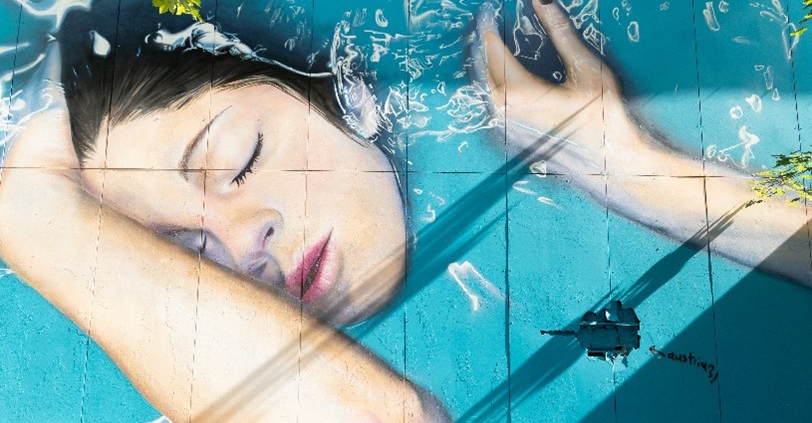
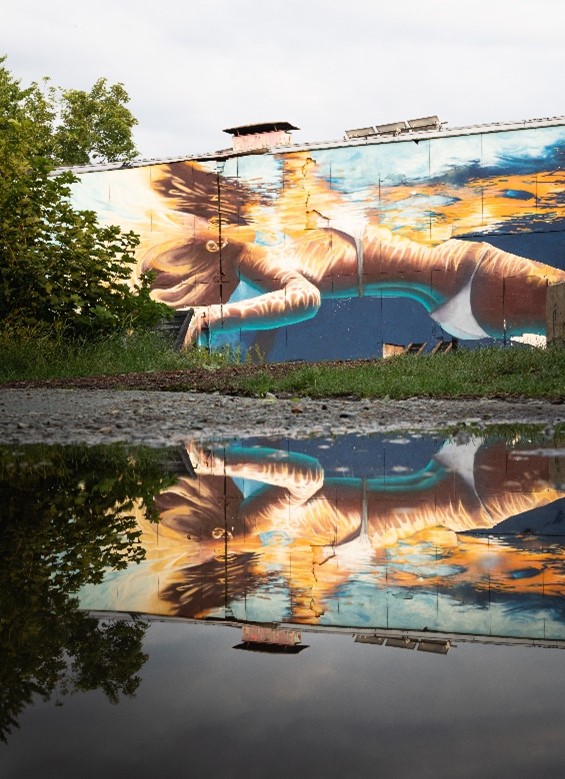
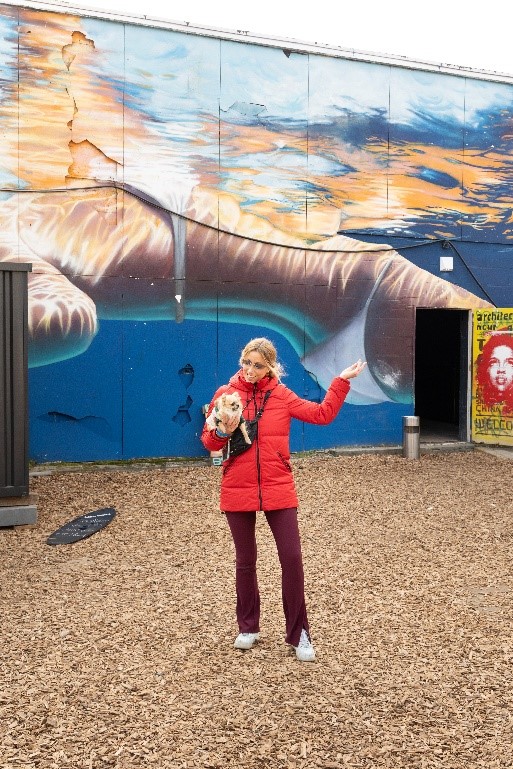
Artist Amanda Arrou-tea, better known as Mandi Oh, was born in San Sebastián, in the Basque Country of Spain. Her art is deeply rooted in the connection between femininity, water, and the search for identity. Two of her stunning murals can be found at Teufelsberg in Berlin: Summer Solstice (2020) and Born Again (2024), the latter created as part of the Power of Female Art festival.

The Ocean as a Source of Inspiration

From an early age, Mandi Oh felt a strong connection to mermaids—not as mythical creatures, but as real, symbolic beings. This fascination followed her throughout her artistic journey. After completing her Fine Arts degree, she moved to Mexico, strategically settling near the cenotes—natural sinkholes filled with water—where she had once “discovered” her first mermaid.
Her travels eventually led her to Berlin, where she fully established herself as an artist. Her work reflects female empowerment and challenges the way the female body has been portrayed in a historically male-dominated art world.

Summer Solstice – A Monument to Freedom

The large-scale mural Summer Solstice spans nearly 120 square meters in the courtyard of Teufelsberg. It is part of her Mermaids series, which depicts women as confident, natural beings—free from societal expectations or sexualized depictions.

For Mandi Oh, water is the perfect medium to express this message. It symbolizes change, freedom, and the fusion of realism and abstraction. Her Mermaids represent women in their most authentic and powerful form, demanding to be seen and heard, rather than objectified. Summer Solstice captures the magic of a fleeting moment—an expression of vitality and independence.

Born Again – The Rebirth of a Woman

Four years later, in 2024, Mandi Oh created another mural at Teufelsberg during the Power of Female Art festival: Born Again. This piece is a tribute to women who undergo a profound transformation through motherhood.

The mural portrays Kristiana, a friend of the artist from Latvia, who had recently become a mother. With this work, Mandi Oh not only reflects on the physical process of giving life but also on the societal shift women experience after childbirth. Suddenly, they are seen primarily as “mothers,” while their previous identity fades into the background. Born Again celebrates this transformation and focuses on the woman as an individual—not just as a mother.

Feminism as a Guiding Theme

Feminist themes run through all of Mandi Oh’s works. She challenges the objectification of the female body and advocates for equality—removing the word “woman” from certain issues so they are recognized as universal concerns, not just “women’s problems.”
Her upcoming projects continue in this direction. She is currently collaborating with the EU and UNESCO on a new mural in Ustica, Sicily, highlighting climate change and the importance of marine conservation. In the future, she aims to evolve her style—moving away from hyperrealism toward a more fantastical and surreal artistic world.

A Lasting Impact

Mandi Oh’s murals at Teufelsberg are more than just impressive artworks; they carry a profound message. Her art subtly challenges perspectives, placing female experience, freedom, and self-determination at the centre. Through her Mermaids, the magic of water, and the strength of women, she leaves a meaningful mark on the Berlin art scene.